
Sunscreen is the one product almost every dermatologist agrees on, but choosing between mineral and chemical formulas still confuses many people. Mineral sunscreens use different active ingredients, feel different on the skin, and often suit people with sensitive or reactive skin. Understanding how they work makes it easier to choose one you’ll actually wear every day, and common questions about mineral formulas are covered at https://sonyadakar.com/pages/skincare-faqs.
How Mineral Sunscreens Work
Mineral sunscreens use zinc oxide, titanium dioxide, or both as their active ingredients. These minerals sit on the surface of the skin and protect it mainly by absorbing ultraviolet light, while also reflecting and scattering some of it. Zinc oxide is especially valued because it offers broad protection across both UVA and UVB rays.
Chemical sunscreens use organic filters that absorb UV light and convert it into a small amount of heat. Both types can protect skin well when applied properly. The main differences are in texture, finish, and how sensitive skin tends to react.
Reasons People Choose Mineral Formulas
Mineral sunscreens have several qualities that appeal to particular skin types:
- Gentle on sensitive skin. Zinc oxide and titanium dioxide are less likely to sting or irritate than some chemical filters.
- Often suitable after procedures. Many dermatologists suggest mineral formulas for skin recovering from treatments.
- Protection starts on application. There’s no waiting period for the filters to work, although letting the product settle helps it last.
- Helpful for redness-prone skin. Zinc oxide has soothing qualities, which many people with redness appreciate.
- Recognized safety profile. In the United States, zinc oxide and titanium dioxide are the two sunscreen ingredients the FDA has proposed as generally recognized as safe and effective.
The Common Drawbacks
Mineral sunscreens aren’t perfect. Older formulas often left a visible white cast, especially on deeper skin tones. Newer versions use finer particles and tinted bases to reduce this, but it’s still worth testing before committing. Some mineral formulas also feel thicker and can be harder to spread evenly, so applying in small sections helps. Further answers about the disadvantages of mineral sunscreen, and how it compares on the face, can be found at https://sonyadakar.com/pages/skincare-faqs.
How to Apply Sunscreen Properly
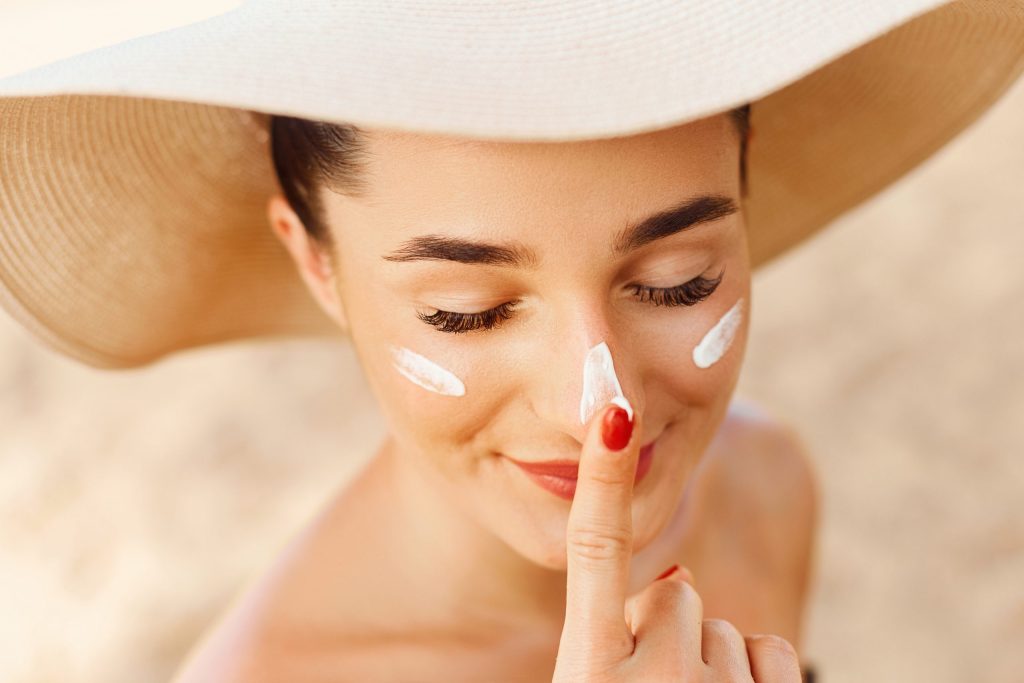
Even the best sunscreen only works if enough is used. For the face and neck, roughly a quarter teaspoon is a reasonable guide. Apply it as the final step of the morning routine, before makeup. The American Academy of Dermatology recommends a broad-spectrum sunscreen with SPF 30 or higher.
Reapplication matters just as much. Sunscreen should be reapplied at least every two hours outdoors, and immediately after swimming or heavy sweating. Water-resistant labels indicate how long protection lasts in water, but they don’t remove the need to reapply.
Making It a Daily Habit
The best sunscreen is the one you’re happy to wear every day. Tinted mineral formulas can double as a light base, and lightweight lotions suit oily skin. Finding a texture you like makes daily protection far easier, and that consistency does more for long-term skin health than any other single step.